Gold’s role as a safe-haven asset has only strengthened in recent years. After briefly surpassing $4,000 per ounce, the market saw a natural correction of about 10% — a classic case of short-term overshooting followed by normalization. Rather than a warning sign, this is a healthy consolidation before the next sustainable uptrend.
In a world of rising debt, monetary expansion, and geopolitical risk, gold remains not just a hedge, but a strategic pillar of portfolio resilience.
A Healthy Correction After an Overshoot
Gold’s rally beyond $4,000 was driven by liquidity, fear, and momentum trading. Such rallies often overshoot fair value before stabilizing. The recent pullback was both inevitable and necessary to reset market positioning.
Key drivers still supporting gold:
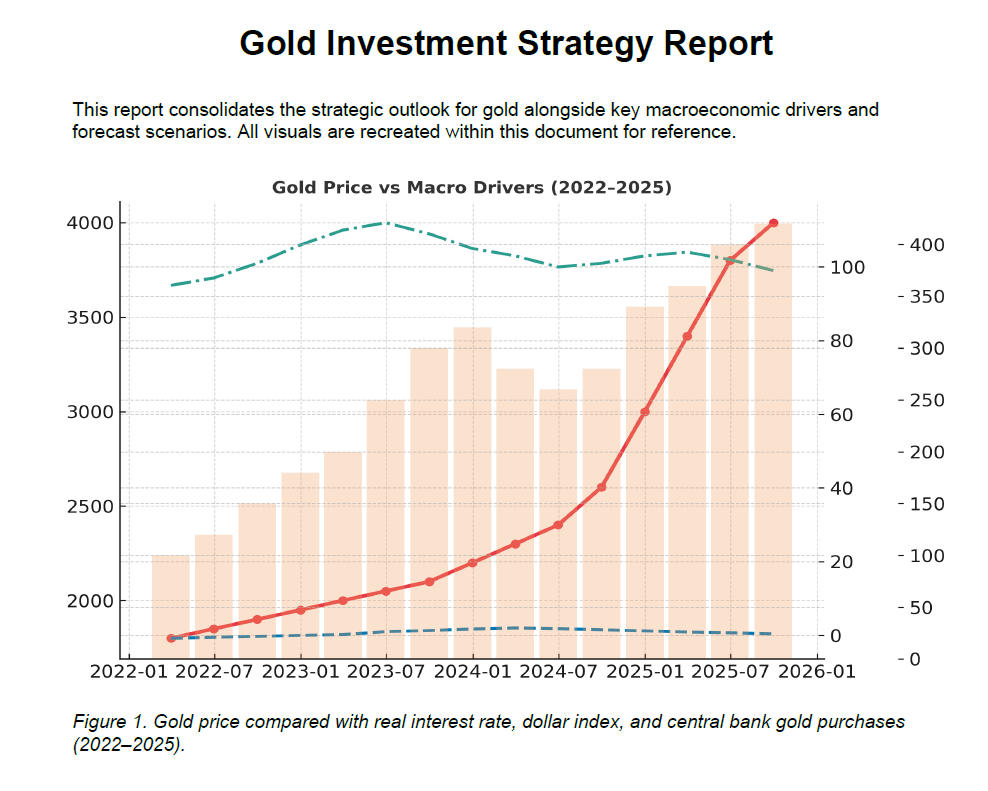
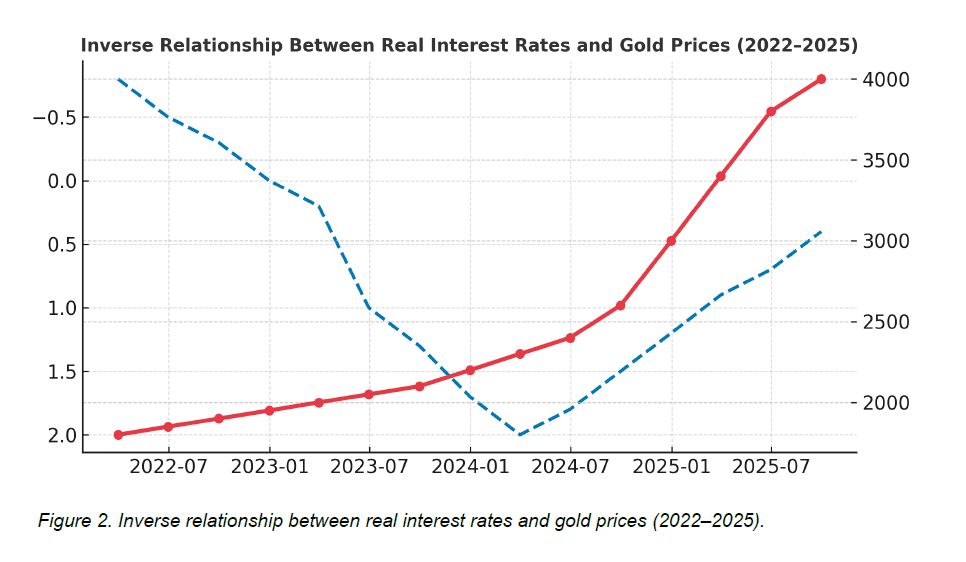
Falling real interest rates: As global central banks prepare to cut rates, real yields are likely to drop. Historically, every 1% decline in real rates has lifted gold by 15–20%.
A weaker U.S. dollar: Fiscal strain, swelling U.S. debt, and diversification away from the dollar point toward structural dollar weakness.
Central-bank demand: China, India, and Middle Eastern nations continue to accumulate reserves for geopolitical and sanction-risk protection.
In short: The correction is a reset, not a reversal — a pause before a stronger, more sustainable climb.
Falling Real Rates, Rising Gold — and the Inflation Hedge
The real interest rate (nominal – inflation) measures currency purchasing power. When real rates fall or turn negative, cash erodes, while gold holds its intrinsic value.
Why it matters now:
Persistent fiscal deficits depress real yields over time.
Expanding money supply (“money printing”) dilutes paper currency, making gold the natural hedge against monetary expansion.
Energy or war shocks push up inflation faster than rates adjust.
Countries under sanctions diversify reserves into gold to stay outside Western financial control.
Even if the dollar index (DXY) looks stable, all fiat currencies can lose value together — leaving gold as the ultimate standard of value.
Geopolitical Risks: From Ukraine to Venezuela
Gold demand often spikes when global uncertainty grows — and 2025 is no exception.
Russia–Ukraine War: Triggered massive gold purchases as sanctions disrupted global reserves.
Middle East Conflicts: Ongoing instability and oil-supply disruptions raised inflation risk.
Taiwan Strait: Persistent military exercises have raised the long-term probability of great-power confrontation.
Venezuela–U.S. Tension: The United States recently reinforced its military presence in the Caribbean, deploying a carrier group and striking suspected trafficking vessels near Venezuela — raising regional conflict concerns and adding another layer of geopolitical uncertainty.
For central banks, this environment reinforces one truth: gold equals independence. Even if annual buying slows from record levels, structural drivers — reserve diversification, sanction avoidance, and fiat distrust — ensure that official-sector demand remains strong.
The Technical Picture: Normal Consolidation in a Bull Market
Technically, gold remains in a multi-year uptrend. Pullbacks of 10–15% have historically marked mid-cycle consolidations, not reversals. Momentum indicators and moving averages continue to support a bullish structure.
Strategy: Mid-Term Holding and Portfolio Hedging
In a balanced portfolio, gold should hold a strategic allocation of 10–15%. It acts as an insurance policy against policy error, inflation drift, and currency debasement.
Time Horizon
Macro Setting
Gold Outlook (USD/oz)
Investor Strategy
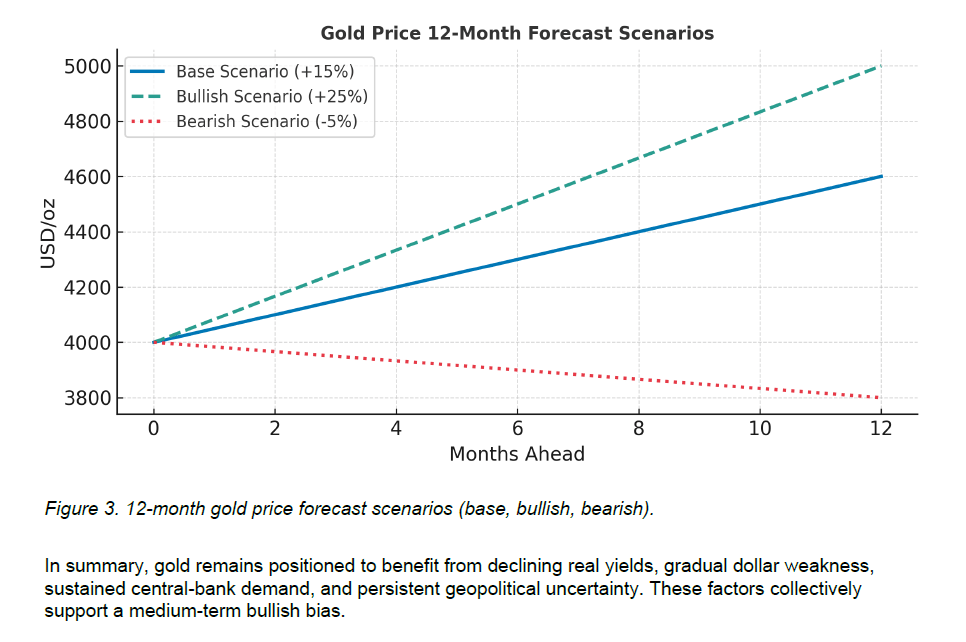
6 Months
Rate cuts begin, liquidity improves
3,800 – 4,200
Maintain core exposure (10–15%)
12 Months
Weaker dollar, stable inflation
4,200 – 4,600
Add on dips, average gradually
Mid-Term (24 Months)
Monetary easing, global rebalancing
4,600 + potential
Maintain position as a structural hedge
💡 Tip: Timing the market rarely works. Gradual accumulation during pullbacks builds protection against shocks that can’t be predicted.
Risks to Monitor
A strong rebound in U.S. growth could delay rate cuts.
Crypto and digital-asset alternatives could absorb some speculative capital.
Even so, gold’s core fundamentals — monetary debasement, fiscal strain, and geopolitical fragmentation — remain intact.
Accumulate Gradually and Wisely
Gold has moved beyond the “fear trade.” It is now a strategic necessity for investors navigating a world of slow growth, mounting debt, and political uncertainty.
Expanding money supply, structural deficits, and de-dollarization trends make mid-term gold holding essential as part of a diversified hedge strategy. While short-term volatility will persist, the broader cycle favors tangible assets.
For prudent investors, this is not a time to sell — but to accumulate gradually and wisely, anchoring gold as a steady pillar of long-term portfolio security.
 tangent-one
Leave a comment